An LP sleeve is a square of roughly 31.5 cm, often the work of a photographer or an illustrator. It would be a shame to leave that artwork tucked away in a compartment. Displaying your vinyl on the wall turns a collection into personal decor that says more about your taste than any poster. Vinyl frame, wall holder or tabletop stand: here are the options, some layout ideas and the precautions to take.
Vinyl frame or open holder: two approaches
The vinyl frame
A closed frame, with glass or a clear panel, protects the sleeve from dust and fingerprints. It suits records you no longer play, or sleeves you want to showcase for the long term: a signed album, a first pressing, a family record. The drawback: taking the record out means unhooking and opening the frame, not something you will do every evening.
The open wall holder
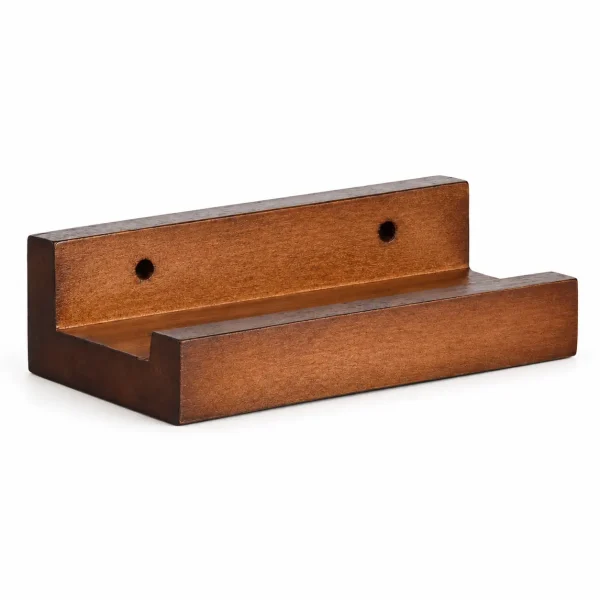
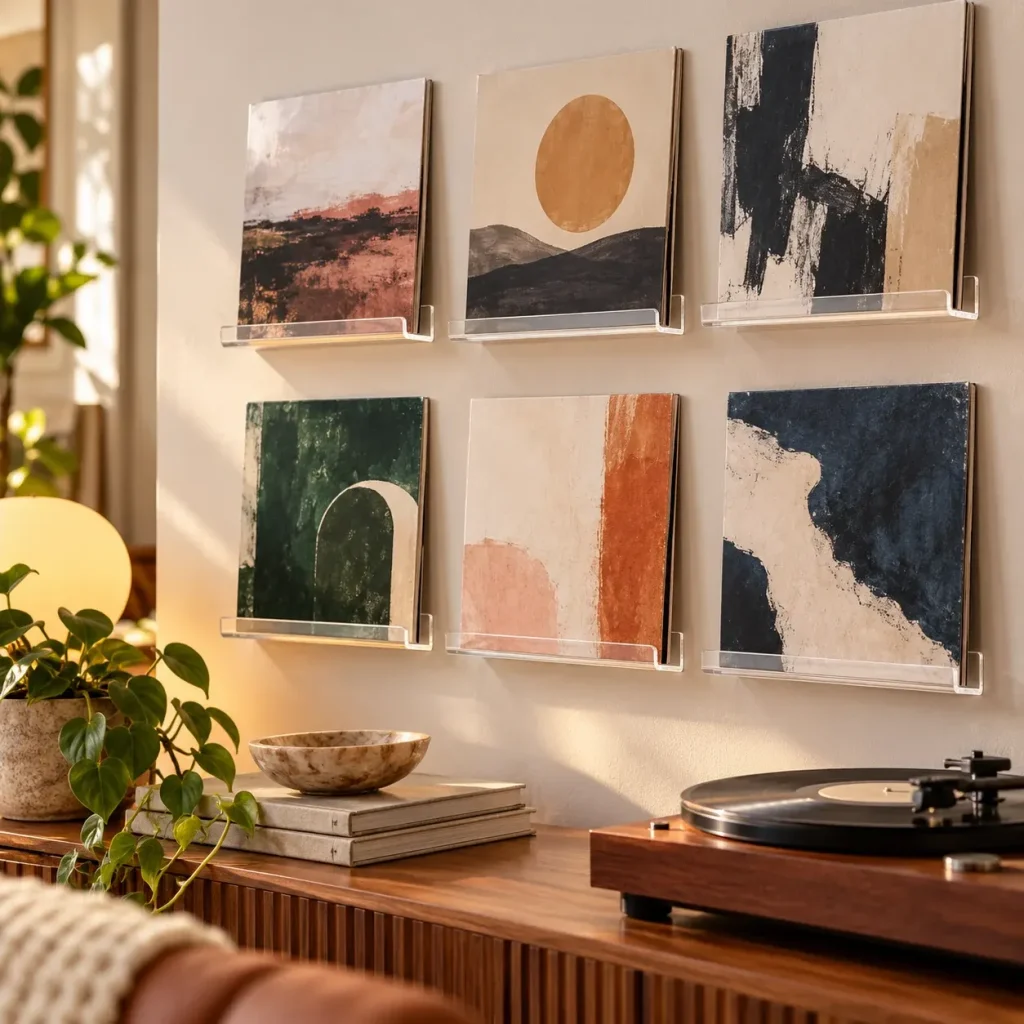
An open holder supports the sleeve from below without enclosing it. You put the record up and take it down in one movement. It is the go-to choice for listeners who like to rotate their display: the album of the moment, this week’s discovery, a classic brought out for the occasion. The wall comes alive, and the record stays available to play.
Our range of vinyl record wall holders covers several styles:
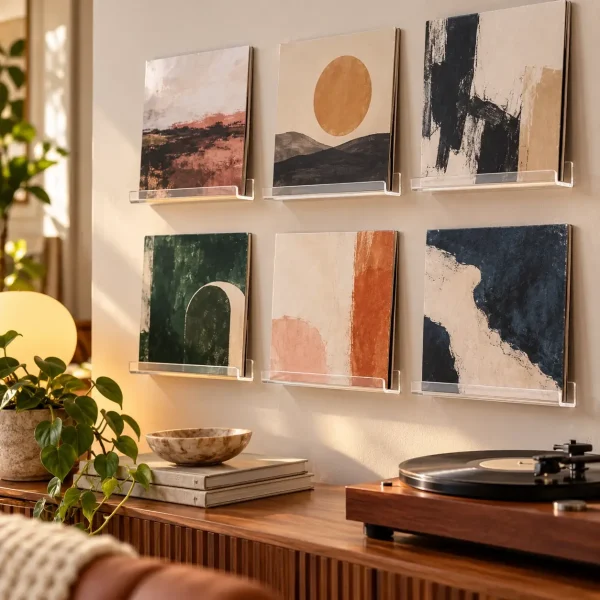
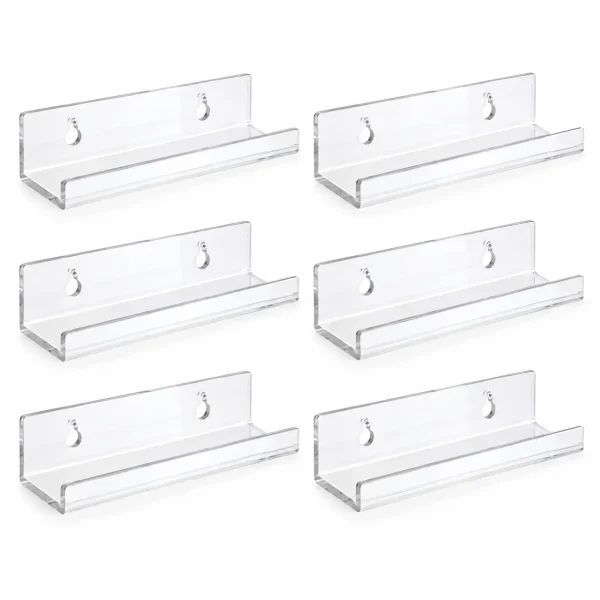
- Galerie: a set of 6 clear acrylic wall holders, so only the sleeve catches the eye.
- Vendôme: a single clear acrylic wall holder, to complete a display.
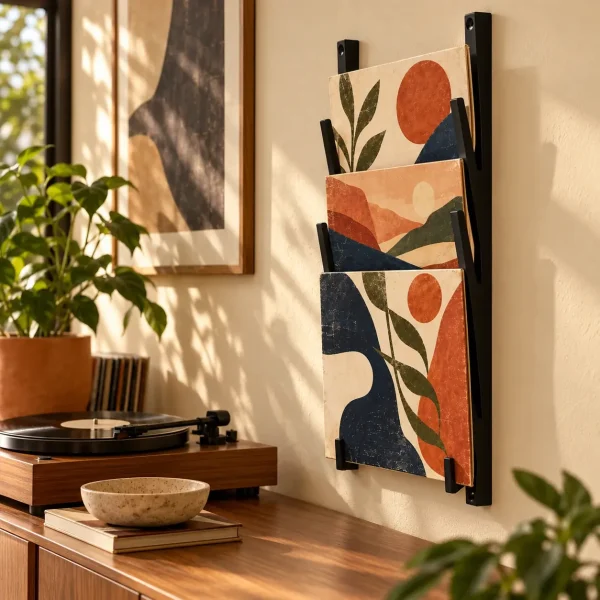
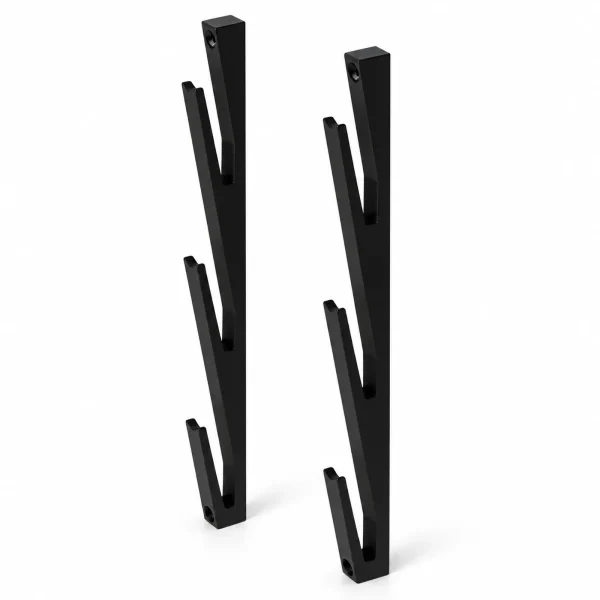
- Opéra: a wooden wall holder that presents sleeves in a cascade.
- Sèvres: 6 wooden wall holders, warmer against a light-coloured wall.
Vinyl wall decor ideas
The regular grid
Three sleeves across three rows, aligned and evenly spaced: the grid is the most graphic layout. It works well above a low unit or a sofa. Mark out the grid first in pencil or with masking tape, then check the alignment with a spirit level before drilling.
A row above the cabinet
A single row of sleeves above the turntable cabinet creates a coherent listening corner. The holders in the row take the records of the moment, while the cabinet keeps the rest of the collection.
A theme
A label, a decade, a dominant colour, an artist: choosing a common thread gives the wall unity, even with very different sleeves. A series of black-and-white sleeves on a light wall, for example, stays understated.
Rotation
There is no need to fix your display for good. With open holders, swap the sleeves with the seasons or with what you are listening to. It is also a way to rediscover records forgotten at the back of the compartments.
Mixing formats and materials
A wall made up only of sleeves can look repetitive. Slip in a gig poster, a framed photo or a smaller 7″ single between them to give the whole thing rhythm. As for materials, wood warms up a white wall or a Scandinavian interior, while clear acrylic fades into the background and leaves the stage to the sleeve artwork. Keep the height consistent: the centre of the arrangement is often placed at eye level, or around twenty centimetres above the furniture beneath it, so the whole reads as one.
The “now playing” stand: a display you simply set down
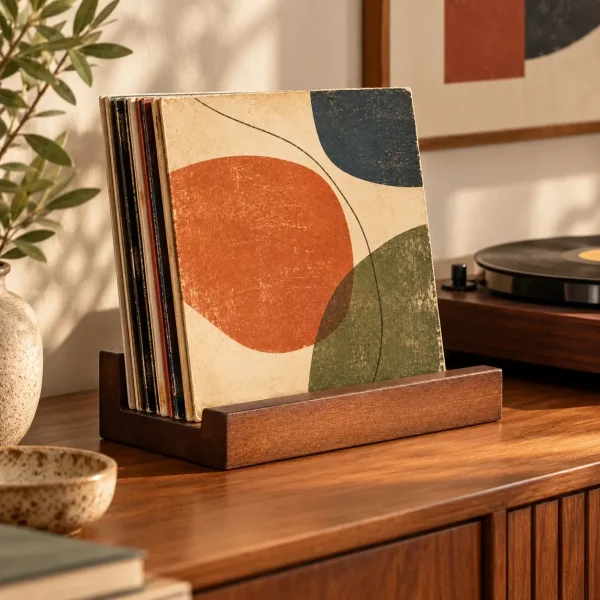
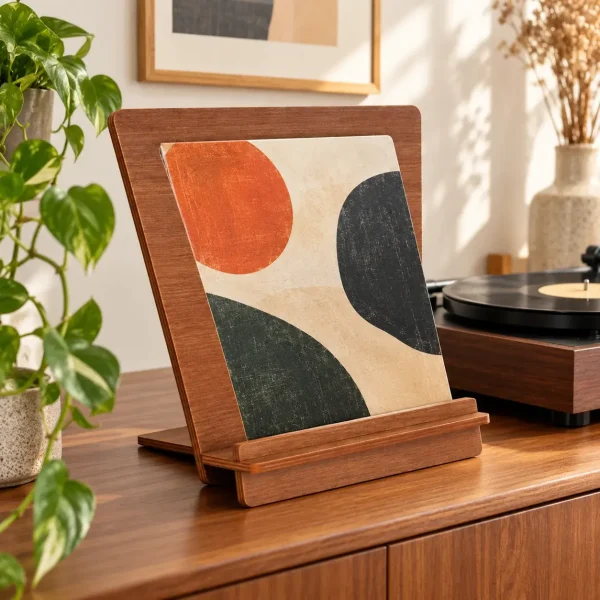
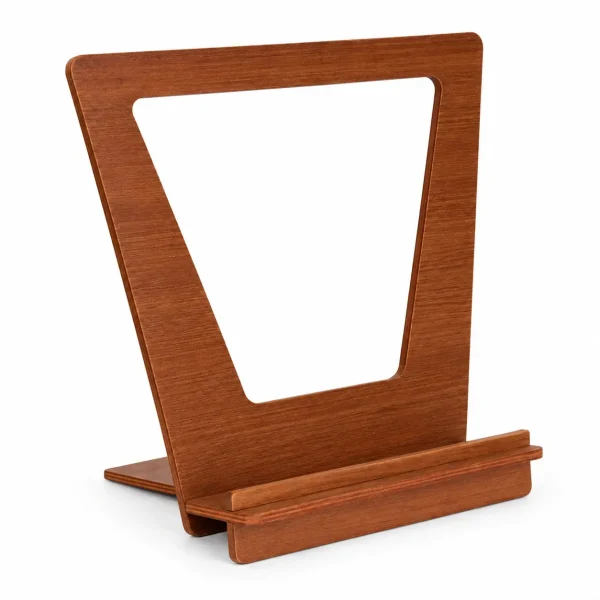
If you would rather not drill, or simply want to show the record you are playing, a now playing record stand sits on the cabinet next to the turntable. The sleeve of the record on the platter stays on show, then goes back into its compartment when the side ends.
- Lepic: a wooden “now playing” stand.
- Montorgueil: a “now playing” stand combining wood and metal.
- Dauphine: a small angled stand for one sleeve.
- Ternes: a metal holder that stores or displays one sleeve.
- Châtelet: an illuminated “now playing” stand.
Precautions to take
Direct sunlight
Sunlight fades the colours of sleeves, sometimes within a few months on a very sunny wall. It also heats the record, which can warp if it stays in its sleeve on the wall. Choose a wall that does not get direct sun, or display the sleeve only and store the record separately.
Heat
Avoid walls above a radiator, near a stove or a fireplace, as well as kitchen walls. Heat and temperature swings damage cardboard and vinyl alike.
Fixing to the wall
A wall holder carries little weight, but it must stay put when you place or remove a record. The right fixing depends on your wall:
| Wall type | Suitable fixing |
|---|---|
| Plasterboard (drywall) | Plasterboard-specific wall plugs, or screws into a stud |
| Concrete, stone | Wall plugs suited to solid materials, drilled with the appropriate bit |
| Hollow brick, breeze block | Wall plugs designed for hollow materials |
| Wood | Wood screws directly |
Before drilling, check for electrical cables or pipes, and bear in mind that any screws supplied may not suit your wall type. If you rent, check what your tenancy agreement allows.
Frequently asked questions
What size frame do I need for an LP?
An LP sleeve measures about 31.5 cm square. A vinyl frame therefore needs an internal opening slightly larger than that, with enough depth for the thickness of the sleeve.
Can I display a record on the wall and still play it?
Yes, with an open holder: the sleeve comes off in one movement. Just avoid walls exposed to sunlight or heat if the record stays in its sleeve.
How can I display records without drilling?
A stand placed on a cabinet or shelf shows off a sleeve without any fixing. It is the simplest option for the record you are currently playing.
How many sleeves should I put on the wall?
There is no rule. A row of three to five sleeves is enough to dress the wall above a cabinet; a larger grid becomes the focal point of the room.