A regular crackle, a hiss that drowns out the quiet passages, a stylus that picks up a little grey ball of fluff: dust is vinyl’s everyday enemy. It settles deep in the groove, which the stylus travels along every time you play. Knowing how to clean vinyl records properly improves the sound and extends the life of both the record and the stylus. As long as you go about it the right way, because careless cleaning can do more harm than the dust itself.
First things first: handle the record correctly
The best clean is the one you never need to do. Fingerprints leave grease in the groove, and that grease holds on to dust. Always hold the record by its edge with your fingertips, with a finger on the centre label if needed. Never put a bare record down on a table or the sofa, even for a few seconds.
Also get into the habit of putting the record back in its sleeve as soon as you have finished listening. A record left on the turntable with the lid open gathers dust within hours.
Everyday cleaning: the carbon fibre brush
For routine care before each play, a carbon fibre brush is enough in most cases. Its very fine bristles reach into the groove and lift surface dust. They also help reduce static electricity, which attracts particles.
The right technique
- Place the record on the platter and start it spinning, with the tonearm at rest.
- Lay the brush flat on the record without pressing, bristles following the grooves.
- Let it turn once or twice, holding the brush still.
- Slowly draw the brush towards the edge of the record, then lift it off at an angle to carry the dust away.
Keep a light touch: the record does the work, not your wrist. Clean the brush itself regularly, or it will put back what it picked up.
Deep cleaning: fluid and microfibre
A second-hand record, a disc left out of its sleeve for a long time or a pressing that still crackles after brushing needs a wet clean.
Which fluid should you use?
Choose a fluid designed for cleaning vinyl records. These products are formulated to dissolve grease and dirt without attacking the vinyl or the paper label. Failing that, distilled water is better than tap water, whose limescale can leave deposits in the groove.
How to go about it
- Dust the record with the carbon fibre brush first, so you do not rub grit into the groove.
- Apply a little fluid to a clean microfibre cloth, or directly onto the record, as the product instructions say.
- Wipe along the grooves in a circular motion, without pressing and never across them.
- Avoid wetting the centre label: the paper cockles and can stain.
- Turn the record over and repeat on the other side.
Drying
Let the record air-dry, upright in a clean drying rack or standing vertically, away from dust. You can also wipe it gently with a second, dry microfibre cloth, always following the grooves. Never put a record back in its sleeve while it is still damp: moisture encourages mould, on the record and on the cardboard alike.
For a large second-hand collection, there are also record cleaning machines, manual or vacuum-powered. They are an investment, but they treat both sides evenly.
What not to do
- Use neat alcohol, acetone or household cleaners: these solvents can attack the vinyl or leave a film.
- Rub with a tissue, kitchen roll or a tea towel: their fibres scratch or stay in the groove.
- Wipe across the grooves: the surest way to create micro-scratches.
- Press hard: pressure pushes dirt deeper into the groove instead of lifting it out.
- Dry with a hairdryer or near a radiator: heat can warp the record.
- Hold the record under the tap without protecting the label.
Clean the stylus, carefully
A clean record played with a dirty stylus will not sound any better. The stylus builds up a fine layer of dust, sometimes visible to the naked eye. Cleaning it takes a delicate touch: the diamond tip and the tiny arm that carries it, the cantilever, are fragile.
- Use a small soft-bristled brush made for styli.
- Always brush from back to front, in the direction of play, never sideways or from front to back.
- Put the arm on its rest and, if possible, stop the turntable before you start.
- Do not blow on the stylus: the moisture in your breath does not help.
If in doubt, check your cartridge’s manual. If the cantilever looks bent, do not attempt anything: it is time to replace the stylus.
Store well to clean less
Dust mostly settles between plays. The right storage noticeably reduces how often you need to clean.
- An inner sleeve in good condition: anti-static sleeves protect better than paper, which can shed.
- A clear outer sleeve, which also protects the cardboard.
- Records stored upright, never stacked flat, in compartments where they stand straight without being squeezed.
- Away from heat and sunlight, far from a radiator or a window.
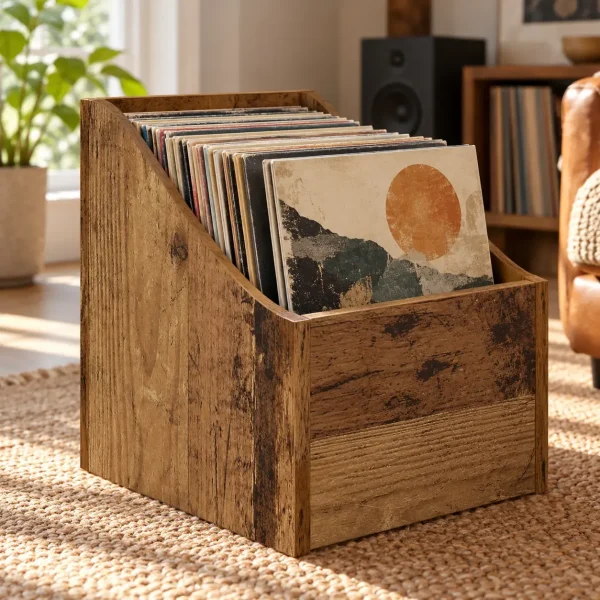
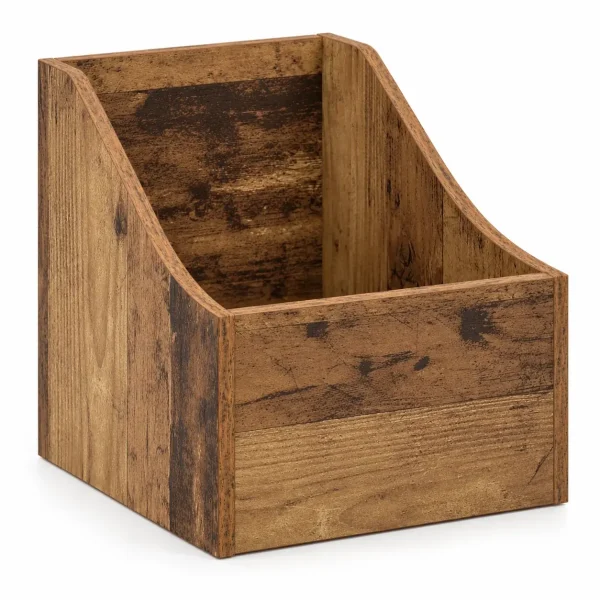
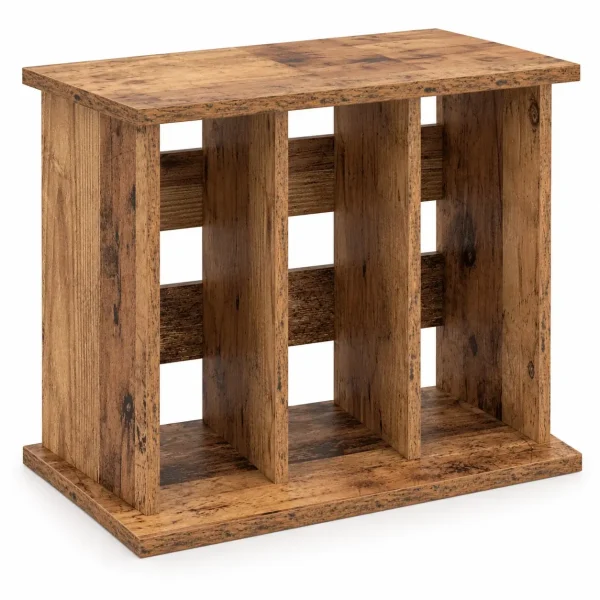
As for furniture, a vinyl record crate such as Corvisart or a storage unit such as Barbès keeps your current selection close at hand. For a whole collection, browse our vinyl record storage. And a record player stand with compartments lets you keep your records right under the turntable, rather than leaving them lying around.
Frequently asked questions
How often should I clean my vinyl records?
A pass with a carbon fibre brush before each play is enough for everyday care. Save wet cleaning for second-hand records, very dirty ones or those that still crackle after brushing.
Can I clean a vinyl record with water?
Distilled water with a clean microfibre cloth will do at a pinch, keeping clear of the label. A fluid made for vinyl remains more effective on greasy marks. Avoid tap water, which contains more limescale.
Does cleaning remove scratches?
No. It removes dust and dirt, which often reduces crackle. A scratch is damage to the groove: no amount of cleaning will make it disappear.
How do I stop the dust coming back?
Put the record back in its sleeve as soon as you finish listening, close the turntable lid and store your vinyl upright, away from heat.