A vinyl hi-fi system is made up of several components: a turntable, an amplifier, sometimes a phono preamp or a CD player, speakers and, of course, the records. Bringing them together on a single hi-fi cabinet is the most practical solution, provided you follow a few rules. Each component has its own requirements: the turntable dislikes vibration, the amp needs air, the speakers need space. Here is how to set them up properly.
Understanding the role of each component
- The turntable plays the record. It must sit flat on a stable surface, away from vibration.
- The phono preamp boosts the cartridge’s very weak signal. It is sometimes built into the turntable or the amp, sometimes separate.
- The amplifier drives the speakers. It gets warm and needs ventilation.
- The speakers produce the sound. They vibrate, especially in the bass.
The cabinet therefore needs to offer a stable top for the turntable, an open recess for the amp and, ideally, keep the speakers at a distance.
Choosing the right hi-fi cabinet
Measure each component
Before choosing, measure everything. A home turntable often takes up around 45 × 35 cm. A standard hi-fi amplifier is a little over 40 cm wide and 30 to 40 cm deep. Note the heights too, and add a few centimetres at the back for cables. Our dimensions guide brings together typical sizes.
Check the recesses
Then compare with the recess dimensions given on the cabinet’s product page. A recess that is too tight forces you to bend cables and restricts ventilation. An open recess, with no door or solid back, is preferable for an amp.
A few examples
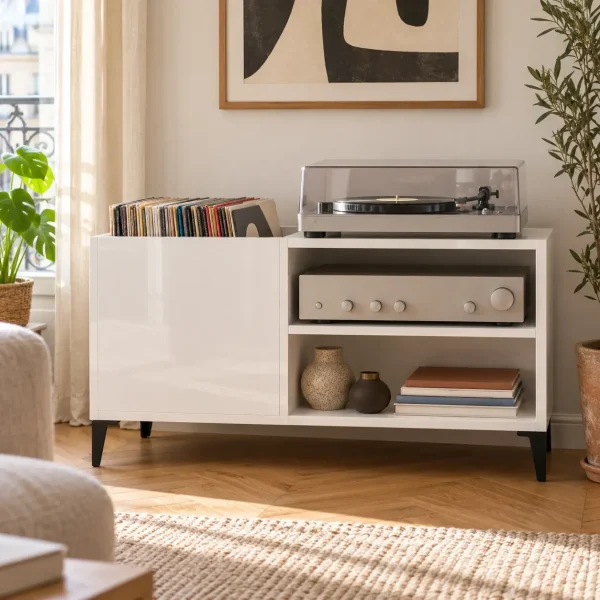
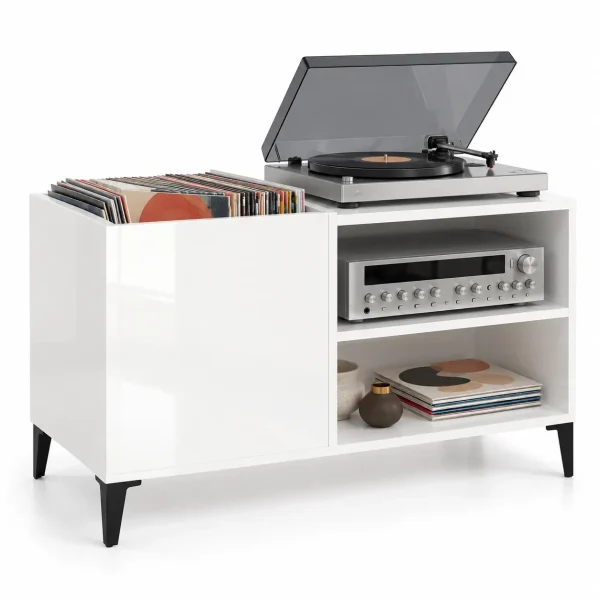
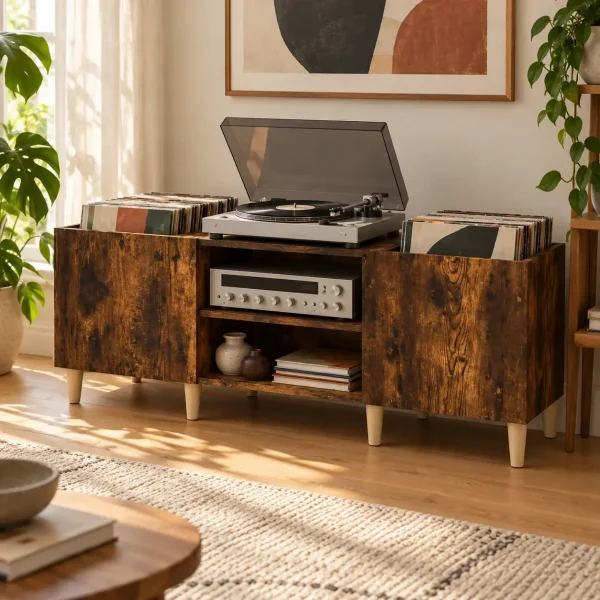
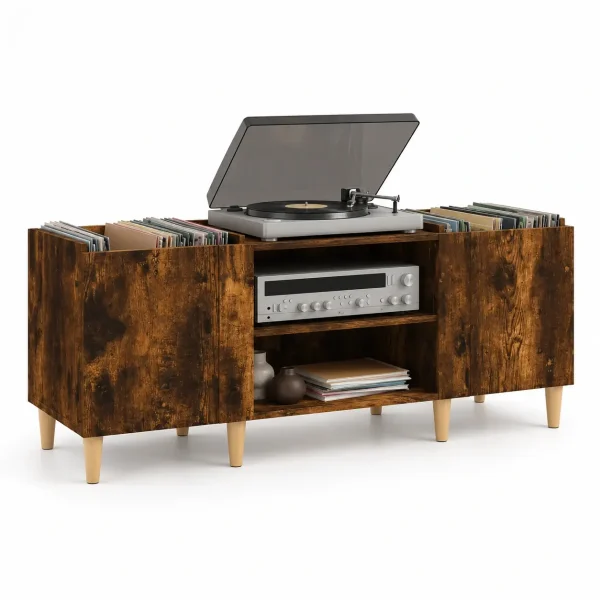
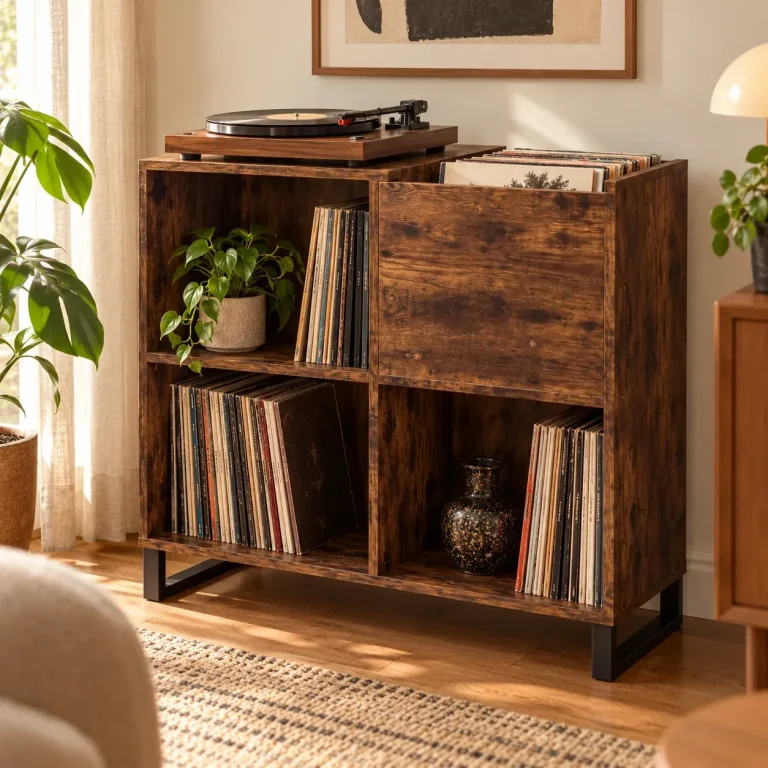
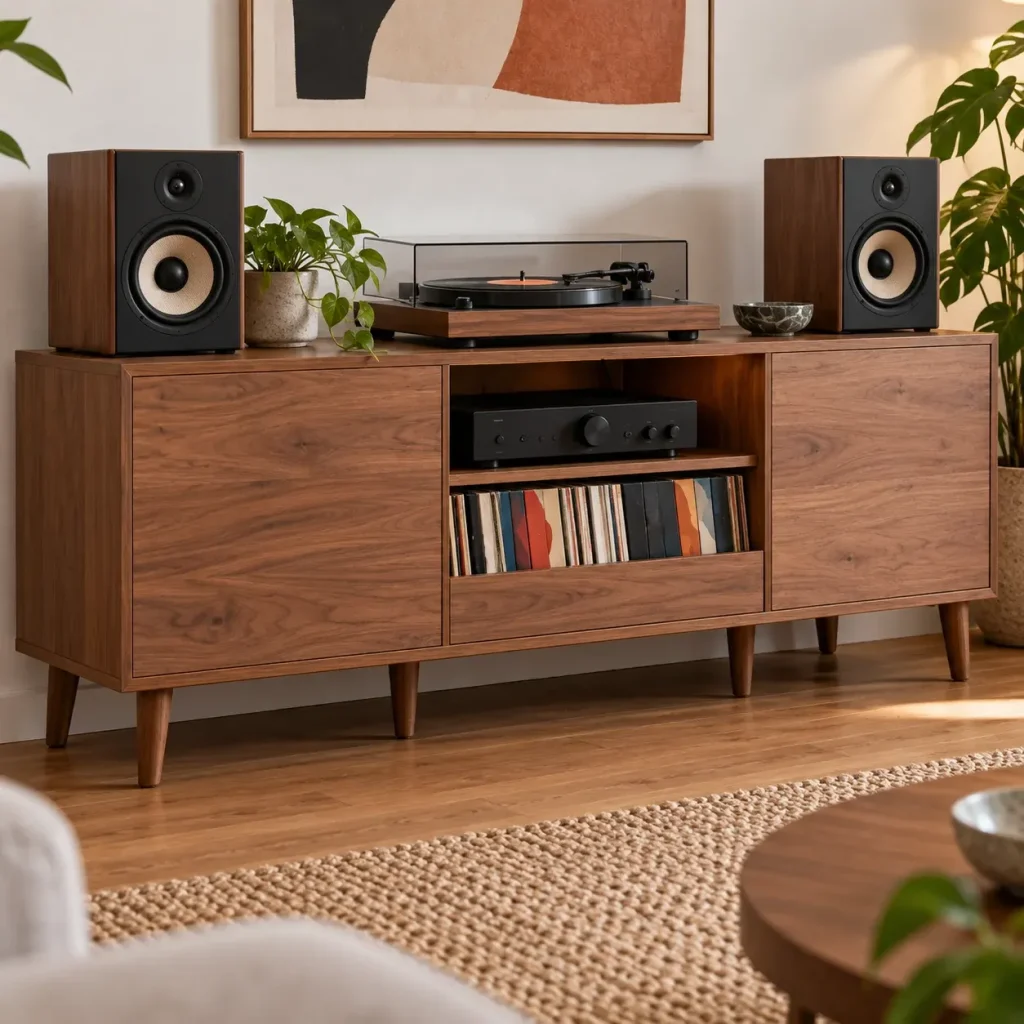
Batignolles, 84.5 cm, has two open recesses on the right for components, next to a large record compartment behind a door. Belleville, 85 cm on metal legs, combines a closed compartment and 2 open recesses. Bastille, 121 cm, puts the recesses in the centre, between two side doors for records. All our models of this type are gathered in the hi-fi furniture collection.
Setting up the turntable
On the top, never in a closed recess
The turntable goes on top of the cabinet: that is where it is easiest to reach and where you can open the lid. Keep clear height above it, often around 40 cm for an open lid.
Level
Once the cabinet is assembled, check it is level with a spirit level. Then check the turntable, and adjust its feet if it allows. A tilted platter distorts playback.
Away from heat
Do not place the turntable directly above an amp that runs hot. If the amp sits under the turntable, make sure the recess is open and well ventilated.
Setting up the amplifier
Ventilation first
An amplifier gives off heat, all the more so when you play loud. For it to work in good conditions:
- leave clear space above and behind it;
- do not put anything on its vents;
- avoid shutting it behind a door while listening;
- follow the clearances recommended by the manufacturer in its manual.
Close to the turntable
The phono cable connecting the turntable to the amp or preamp is often short, and a cable that is too long can pick up interference. So place the amp just below the turntable or beside it.
Stacking components?
Stacking a CD player on an amp is common, but the component on top restricts the ventilation of the one below. If your cabinet has two recesses, give each component its own.
Positioning the speakers
Away from the turntable
This is the most important rule. Speakers vibrate, and those vibrations can travel through the cabinet to the stylus. The result: a muddy sound, or even a howl. Keep them as far from the turntable as possible.
On stands or on the cabinet?
- On speaker stands, either side of the cabinet: the best solution for the sound and for the turntable.
- On the cabinet, if it is long: place them at the ends, with the turntable in the middle or at the opposite end. A 120 cm unit such as Bastille allows this with compact speakers.
- On a separate shelf: an alternative when floor space is short.
Angle
Place the speakers at seated ear height if possible, angled slightly towards you. Move them a little away from the back wall to avoid excessive bass.
Managing cables
A hi-fi system means plenty of cables: power, audio interconnects, speaker cables. To keep things tidy:
- route them behind the cabinet;
- keep power cables apart from audio cables where possible, to limit interference;
- bundle them with cable ties;
- leave the cabinet a few centimetres from the wall so they are not crushed.
Storing your records
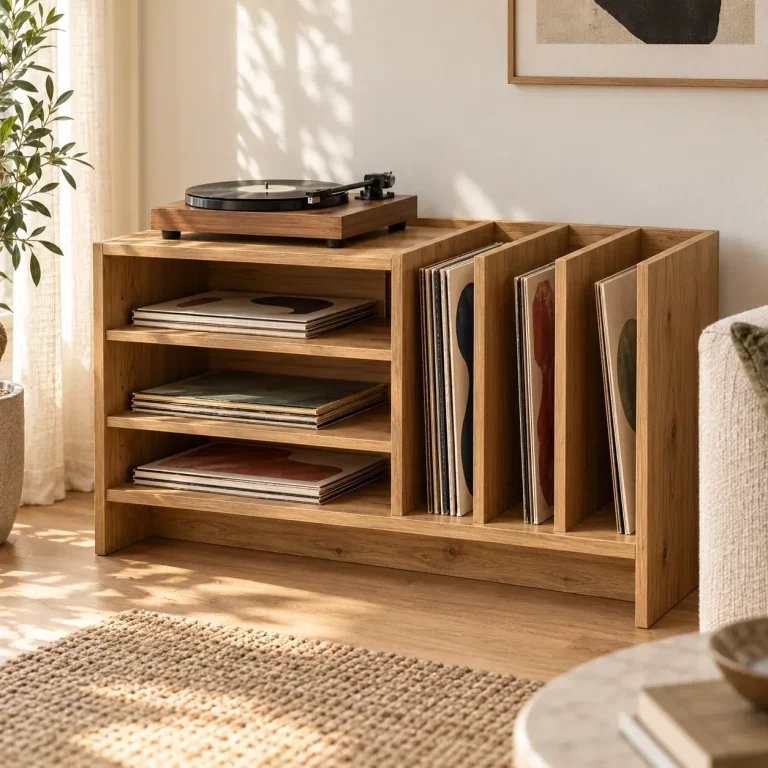
A hi-fi cabinet often holds part of the collection. Compartments should be at least 32 cm high and deep for LP sleeves, which measure around 31.5 cm square. Allow roughly 1 cm of width for 3 to 4 records, depending on their weight. For the rest, a shelf or a crate alongside takes over: see our vinyl record storage.
Hi-fi cabinet and television
If the screen needs to go on the same unit, choose a model of 100 cm or more, to separate picture and sound. Put the screen in the middle, the turntable to one side, and keep set-top boxes and consoles in ventilated recesses. See our selection of TV and hi-fi units.
In summary
- Measure each component, cables included.
- Put the turntable on the top, level, with room for the lid.
- Install the amp in an open, ventilated recess, close to the turntable.
- Keep the speakers away from the turntable, ideally on stands.
- Route the cables behind.
- Store the records upright, in suitably sized compartments.
A well set-up system sounds better, lasts longer and lends itself more to everyday listening. To find the cabinet to house it, browse our hi-fi furniture collection or, more broadly, our record cabinets.